

Social media has transformed the way people communicate, learn, work, and entertain themselves. Platforms that once existed primarily for connecting friends and family have evolved into powerful ecosystems that influence opinions, lifestyles, relationships, and emotional well-being.
Today, billions of people worldwide spend a significant portion of their day scrolling through feeds, watching videos, posting updates, and interacting with online communities.
As social media continues to expand its reach, researchers, psychologists, educators, and parents are asking an important question: How does social media affect mental health?
The answer is not as simple as labeling social media as either good or bad. Like most powerful tools, social media can create positive opportunities while also introducing serious risks. Recent studies indicate that the impact depends heavily on factors such as usage patterns, age, content exposure, emotional resilience, and the purpose behind social media engagement.
Research published in 2025 found that adolescents with mental health conditions often interact with social media differently than those without such conditions, highlighting the complex relationship between digital behavior and emotional well-being.
Understanding this relationship requires looking beyond headlines and examining the psychological mechanisms that shape our online experiences.
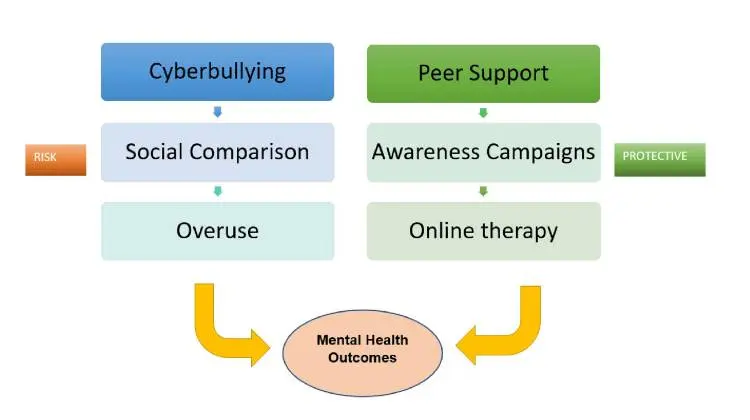
Image Credit – ncbi
Social media can offer support, education, and connection, but it can also trigger anxiety, depression, loneliness, and addictive behaviors. This article explores both sides of the conversation, helping readers understand how social media influences mental health and how to develop healthier digital habits.
Understanding the Relationship Between Social Media and Mental Health
The connection between social media and mental health is multidimensional. Mental health encompasses emotional, psychological, and social well-being, affecting how individuals think, feel, and behave. Social media interacts with all three of these dimensions simultaneously.
Every notification, like, comment, or shared post creates a psychological response that can influence mood and self-perception.
Unlike traditional media, social media is interactive. Users are not merely consuming content; they are participating in a digital environment that constantly evaluates popularity, appearance, opinions, and achievements.
This environment can create feelings of validation when engagement is positive, but it can also generate stress when expectations are not met. Imagine carrying a mirror that not only reflects your appearance but also displays comparisons with thousands of other people every day. That is often how social media functions psychologically.
Researchers continue to debate whether social media directly causes mental health problems or simply amplifies existing vulnerabilities. Evidence suggests that the relationship is often bidirectional.
People experiencing depression or anxiety may use social media differently, while excessive or problematic social media use can worsen existing symptoms.
An Indian adolescent cohort study found evidence supporting this two-way relationship between social media use and psychological well-being.
The Positive Effects of Social Media on Mental Health
While discussions often focus on negative consequences, social media provides substantial mental health benefits when used intentionally. One of the most significant advantages is the ability to maintain relationships across geographic distances. People can stay connected with family members, childhood friends, and support networks regardless of location.
This sense of connection can reduce feelings of loneliness and isolation, especially among individuals who live alone or face mobility challenges.
Social media also creates opportunities for people to find communities that share similar experiences. Individuals dealing with anxiety, depression, chronic illnesses, grief, or other life challenges often discover support groups where they can exchange advice and encouragement.
These communities can offer validation and understanding that may be difficult to find in offline environments. For many people, simply realizing they are not alone in their struggles can provide meaningful emotional relief.
Mental health awareness has also expanded dramatically through social media. Therapists, psychologists, and advocacy organizations regularly share educational content about emotional well-being, stress management, trauma, and self-care. This increased accessibility helps reduce stigma and encourages more people to seek professional help when needed.
Research highlights that social media can facilitate emotional support, increase awareness, and create opportunities for early identification of mental health concerns when used appropriately.
The Negative Effects of Social Media on Mental Health
Despite its benefits, social media presents several challenges that can negatively affect mental health. One of the most common issues is social comparison. People tend to share carefully curated highlights of their lives rather than everyday realities.
Users scrolling through images of vacations, achievements, fitness transformations, and luxury lifestyles may begin comparing themselves to unrealistic standards.
This comparison process can erode self-esteem and create feelings of inadequacy. Someone who was perfectly content before opening an app may suddenly feel unsuccessful, unattractive, or behind in life. These emotional reactions can accumulate over time, contributing to chronic dissatisfaction and anxiety.
The constant exposure to idealized versions of other people’s lives can distort perceptions of what is normal and attainable.
Research continues to identify links between heavy social media use and increased risks of depression, anxiety, and poor well-being among young people. A major Australian study found that spending more than two hours daily on social media was associated with increased depression risk, particularly among adolescent girls.
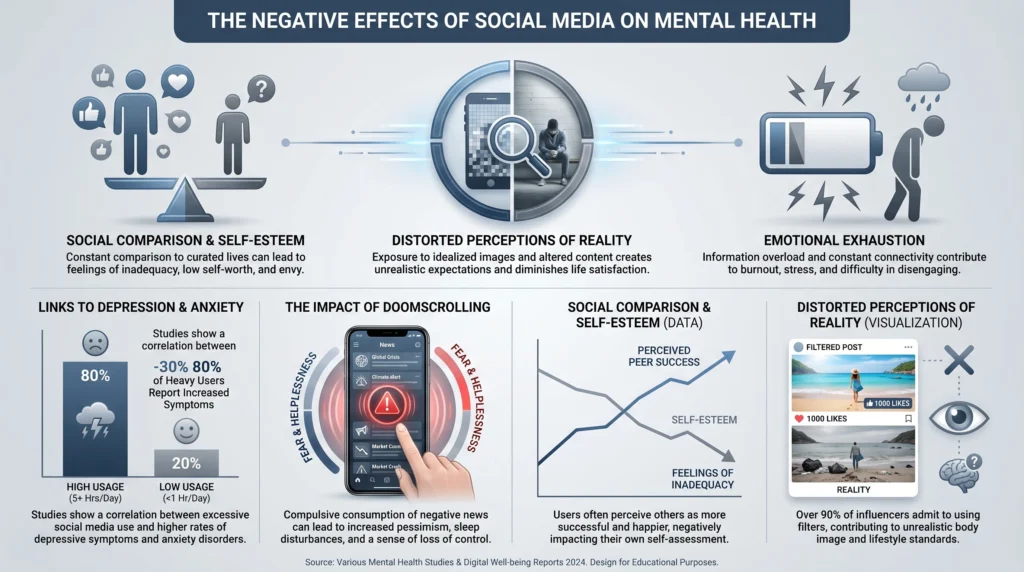
Another concern is the emotional impact of negative content. Social media algorithms often prioritize highly engaging material, which may include conflict, outrage, disasters, or distressing news. Repeated exposure to such content can contribute to emotional exhaustion, stress, and a phenomenon often referred to as doomscrolling.
Instead of feeling informed, users may end up feeling overwhelmed by a constant stream of negativity.
How Social Media Affects Teenagers Differently?
Teenagers are particularly vulnerable to the psychological effects of social media because their brains are still developing. During adolescence, regions responsible for emotional regulation, impulse control, and social evaluation undergo significant changes.
At the same time, peer acceptance becomes increasingly important. This combination creates a perfect environment for social media to exert a powerful influence.
For many teenagers, online interactions carry enormous emotional weight. A single comment, post, or social exclusion can significantly affect mood and self-esteem. The pressure to maintain an appealing online identity often leads young people to spend considerable time editing photos, monitoring engagement metrics, and worrying about social status.
These behaviors can create ongoing stress and emotional dependency.
Sleep disruption represents another major concern. Many teenagers use social media late into the night, reducing sleep quality and duration. Poor sleep is strongly associated with anxiety, depression, irritability, and reduced academic performance.
Studies have also found that problematic or addictive screen use is associated with increased risks of emotional difficulties and suicidal thoughts among adolescents.
Social Media and Teen Mental Health: Key Findings
| Factor | Potential Positive Impact | Potential Negative Impact |
|---|---|---|
| Social Connection | Increased support and friendships | Social pressure and exclusion |
| Information Access | Mental health education | Misinformation exposure |
| Self-Expression | Creativity and identity exploration | Validation dependence |
| Entertainment | Stress relief | Excessive screen time |
| Community Building | Support networks | Echo chambers and comparison |
Social Media Addiction and Mental Well-Being
One of the most significant concerns surrounding social media is the emergence of addictive usage patterns. Unlike traditional addictions involving substances, social media addiction revolves around compulsive behaviors and psychological rewards.
Platforms are specifically designed to maximize engagement through notifications, likes, recommendations, and endless content feeds.
Every time a user receives a notification or positive interaction, the brain experiences a small reward response. Over time, individuals may begin seeking these rewards repeatedly, creating habits that become difficult to control.
This pattern resembles the psychological mechanisms behind gambling, where unpredictable rewards encourage continued engagement.
Signs of problematic social media use include checking platforms immediately after waking up, feeling anxious when unable to access social media, neglecting responsibilities, and spending significantly more time online than intended.
Research indicates that problematic social media use is often more strongly associated with mental health challenges than overall screen time alone. In other words, how people use social media may matter more than the number of hours they spend online.
The challenge lies in recognizing when healthy engagement crosses into unhealthy dependence. Many users underestimate the amount of time they spend online or fail to notice how social media influences their mood throughout the day. Developing awareness is the first step toward creating healthier digital habits.
Social Media Platforms and Their Unique Mental Health Effects
Not all social media platforms affect mental health in the same way. Different platforms emphasize different forms of interaction, which can create unique psychological experiences. Image-focused platforms often encourage appearance-based comparisons, while discussion-oriented platforms may expose users to conflict and information overload.
Instagram, for example, is frequently associated with appearance pressure because visual content dominates the platform. Users are exposed to highly curated images that may create unrealistic beauty and lifestyle expectations.
This can contribute to body dissatisfaction, especially among young users who are still developing their identities.
TikTok presents a different challenge. Its highly personalized algorithm delivers an endless stream of short-form videos that can be extremely engaging. Research examining TikTok’s impact on adolescent mental health found both positive and negative effects, including opportunities for creativity and community alongside risks related to excessive use and harmful content exposure.
Platforms such as Facebook, X, and discussion forums often expose users to large amounts of news and opinion-based content. While this can increase awareness and civic engagement, it may also contribute to information overload, stress, and emotional fatigue.
The mental health impact depends heavily on content quality, personal coping strategies, and individual vulnerabilities.
Strategies for Healthy Social Media Use
The goal is not necessarily to eliminate social media but to develop a healthier relationship with it. Social media can be compared to food: consuming the right amount and choosing high-quality options can support well-being, while excessive or unhealthy consumption can create problems. Digital wellness begins with intentional usage rather than automatic scrolling.
One effective strategy is establishing clear boundaries around screen time. Setting designated periods for checking social media helps prevent constant interruptions and reduces compulsive behaviors.
Many smartphones now include screen time tracking tools that provide valuable insights into usage patterns. Simply becoming aware of daily habits can motivate positive changes.
Curating your online environment is equally important. Following accounts that inspire, educate, or genuinely enrich your life can improve your overall experience. Unfollowing accounts that consistently trigger anxiety, insecurity, or negativity may have an immediate positive effect on emotional well-being.
Think of your social media feed as a garden. The content you allow to grow there shapes the environment you experience every day.
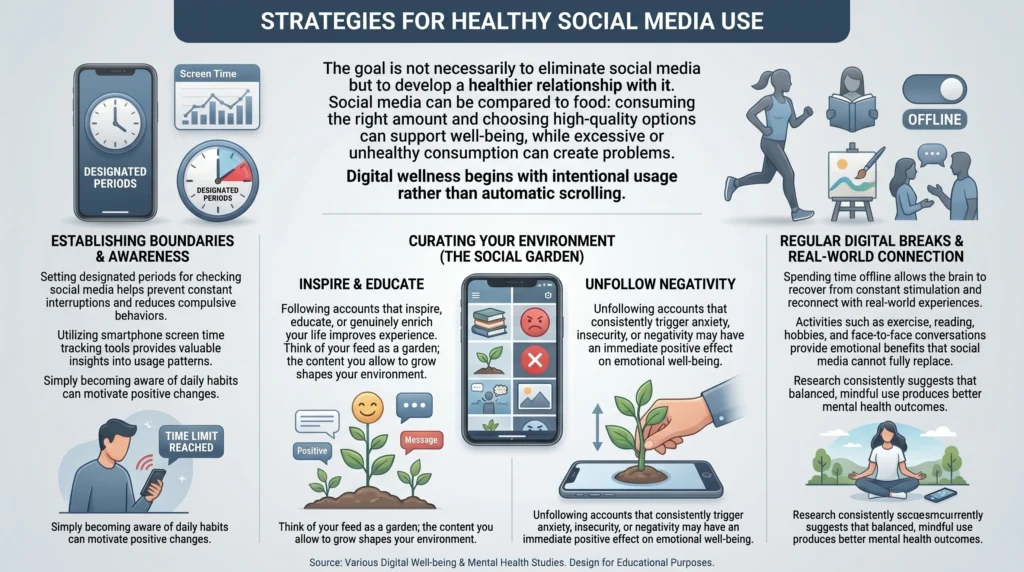
Regular digital breaks can also improve mental health. Spending time offline allows the brain to recover from constant stimulation and reconnect with real-world experiences. Activities such as exercise, reading, hobbies, and face-to-face conversations provide emotional benefits that social media cannot fully replace.
Research consistently suggests that balanced, mindful use produces better mental health outcomes than unrestricted engagement.
The Future of Social Media and Mental Health
As awareness of social media’s psychological effects grows, technology companies, researchers, educators, and policymakers are exploring ways to create healthier digital environments. Some countries have introduced regulations targeting youth social media use, while platforms are experimenting with features designed to reduce harmful behaviors and encourage healthier engagement.
Artificial intelligence, improved moderation systems, and digital wellness tools may play increasingly important roles in identifying harmful content and supporting vulnerable users.
Researchers are also investigating how social media data can help identify early signs of mental health challenges, potentially enabling earlier intervention and support.
The future will likely involve finding a balance between technological innovation and psychological well-being. Social media is unlikely to disappear, but society can continue developing strategies that maximize benefits while minimizing harm.
The conversation is shifting away from whether social media is good or bad and toward understanding how to use it responsibly.
Conclusion
Social media affects mental health in complex and often contradictory ways. It can strengthen relationships, provide emotional support, increase mental health awareness, and create meaningful communities.
At the same time, it can contribute to anxiety, depression, social comparison, cyberbullying, sleep disruption, and addictive behaviors.
The impact depends less on the existence of social media itself and more on how individuals interact with it. Mindful, intentional use tends to support well-being, while excessive, compulsive, or comparison-driven use can create psychological challenges.
Understanding these dynamics empowers individuals to make healthier choices and build a more balanced relationship with digital technology.
As social media continues evolving, the most effective approach is not fear or avoidance but awareness. By recognizing both the opportunities and risks, users can enjoy the benefits of connection and information while protecting their mental health.
What Are Your Thoughts?
Social media affects everyone differently. For some, it creates meaningful connections and opportunities, while for others, it can become a source of stress, anxiety, or self-doubt. The key is finding a healthy balance that supports your mental well-being without letting digital habits take control of your daily life.
Have you noticed social media affecting your mood, productivity, or relationships? Do you think the benefits outweigh the risks?
Share your thoughts and experiences in the comments below. Your perspective could help others better understand the impact of social media on mental health.
For more insightful articles on technology, digital trends, lifestyle, and personal growth, visit WebURL and stay informed with practical content that matters.
FAQs
1. Does social media cause depression?
Social media does not automatically cause depression, but excessive or problematic use can increase the risk of depressive symptoms, particularly among vulnerable individuals and adolescents. Research suggests the relationship is often bidirectional.
2. How much social media use is considered healthy?
There is no universal number that applies to everyone. Healthy use generally involves intentional engagement that does not interfere with sleep, relationships, work, school, or emotional well-being.
3. Why does social media make people anxious?
Social media can trigger anxiety through social comparison, fear of missing out (FOMO), information overload, cyberbullying, and pressure to maintain an idealized online image.
4. Are teenagers more affected by social media than adults?
Yes. Teenagers are often more vulnerable because their brains are still developing and peer approval plays a larger role in shaping self-esteem and identity.
5. What are the benefits of social media for mental health?
Benefits include social connection, access to support communities, mental health education, self-expression opportunities, and increased awareness of mental health resources.